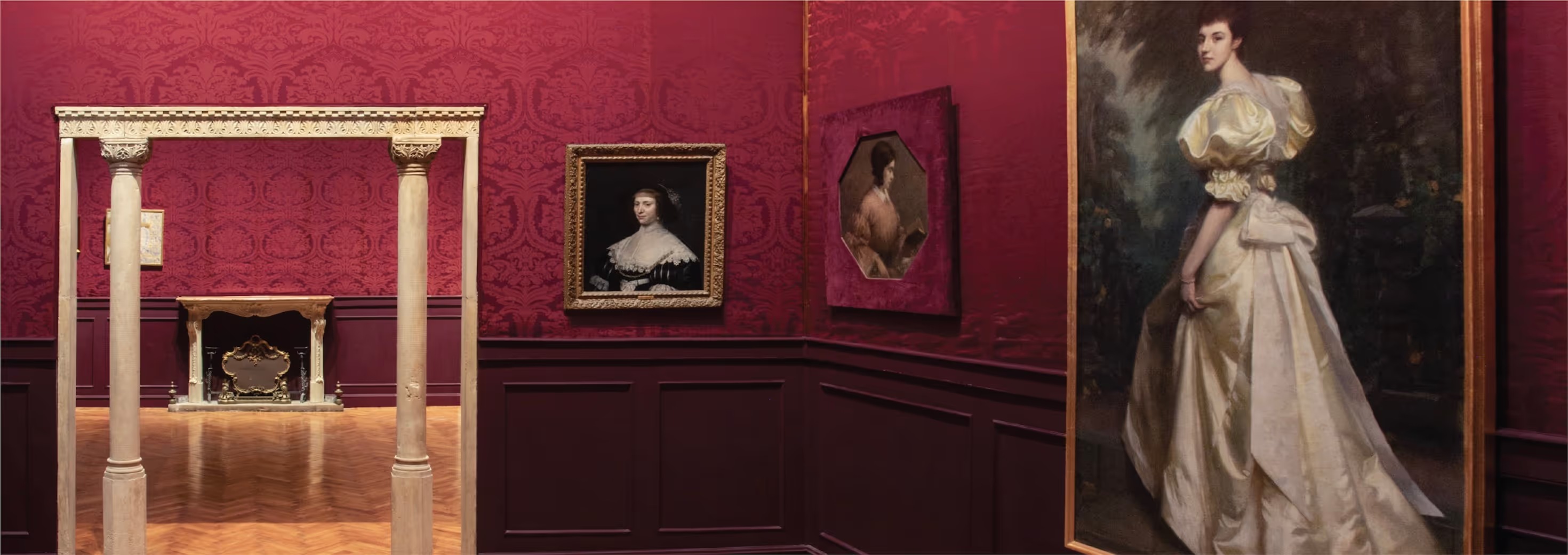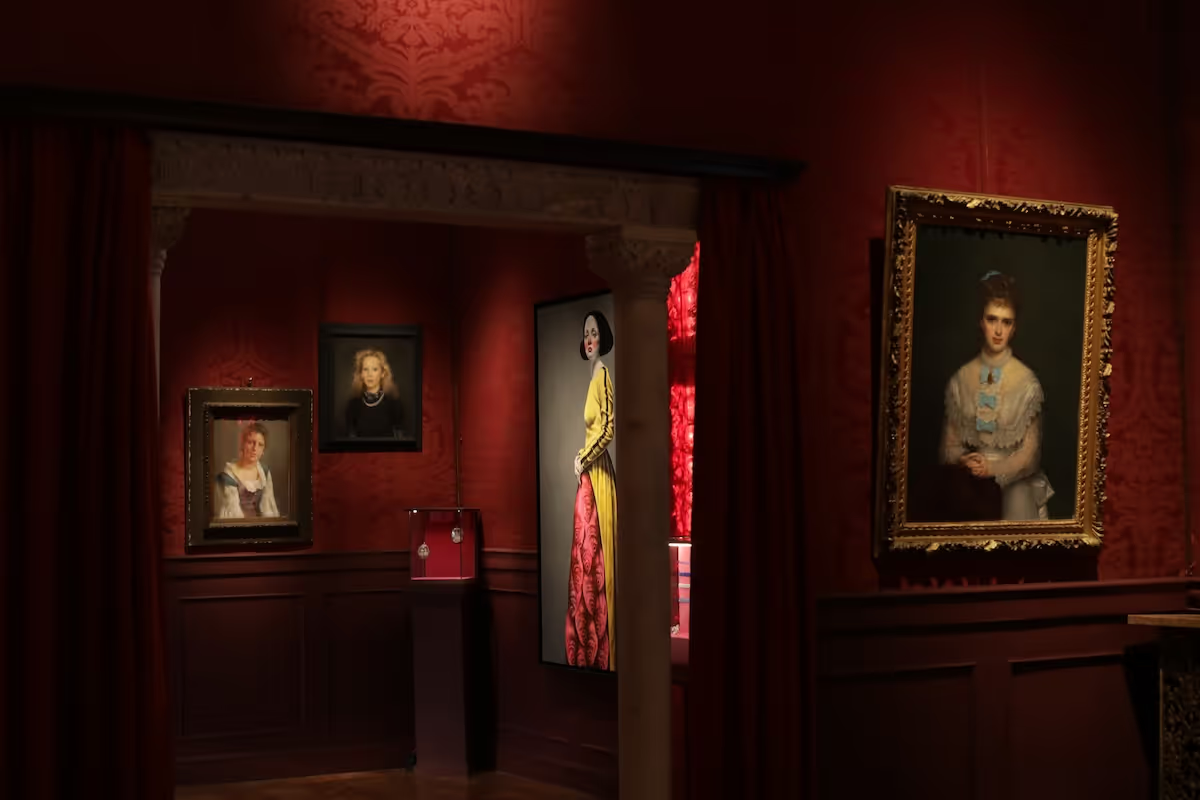

Fondazione Maddalena Di Giacomo is an independent cultural institution based at Palazzo Valier in Venice, bringing together contemporary art, historical objects and sensory culture.
Founded in 2022 in memory of Maddalena Di Giacomo, the Fondazione explores the relationship between art, memory and human experience, with a particular interest in the ways we give form to what cannot be seen or held: affection, absence, identity, belonging and remembrance.
About Maddalena Di Giacomo
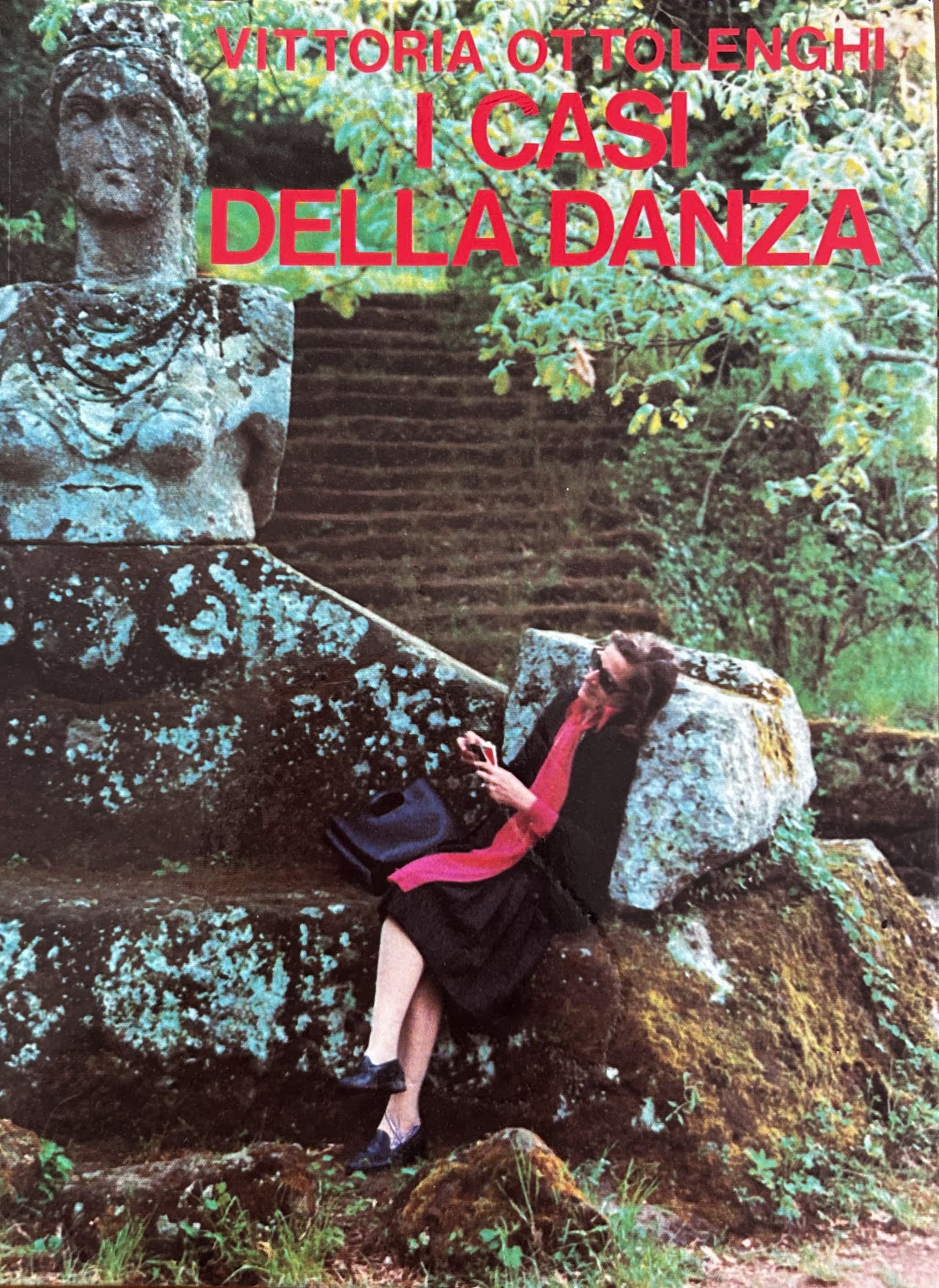
A free and rebellious spirit, Maddalena Di Giacomo devoted her life to art and music, following her creative vocation rather than continuing her family’s entrepreneurial activity in the construction sector. A pianist trained at the Conservatorio di Santa Cecilia, in the 1980s she developed a profound passion for classical ballet, coming into contact with some of the most eminent figures of the period, including Rudolf Nureyev, Vittoria Ottolenghi and Alberto Testa.
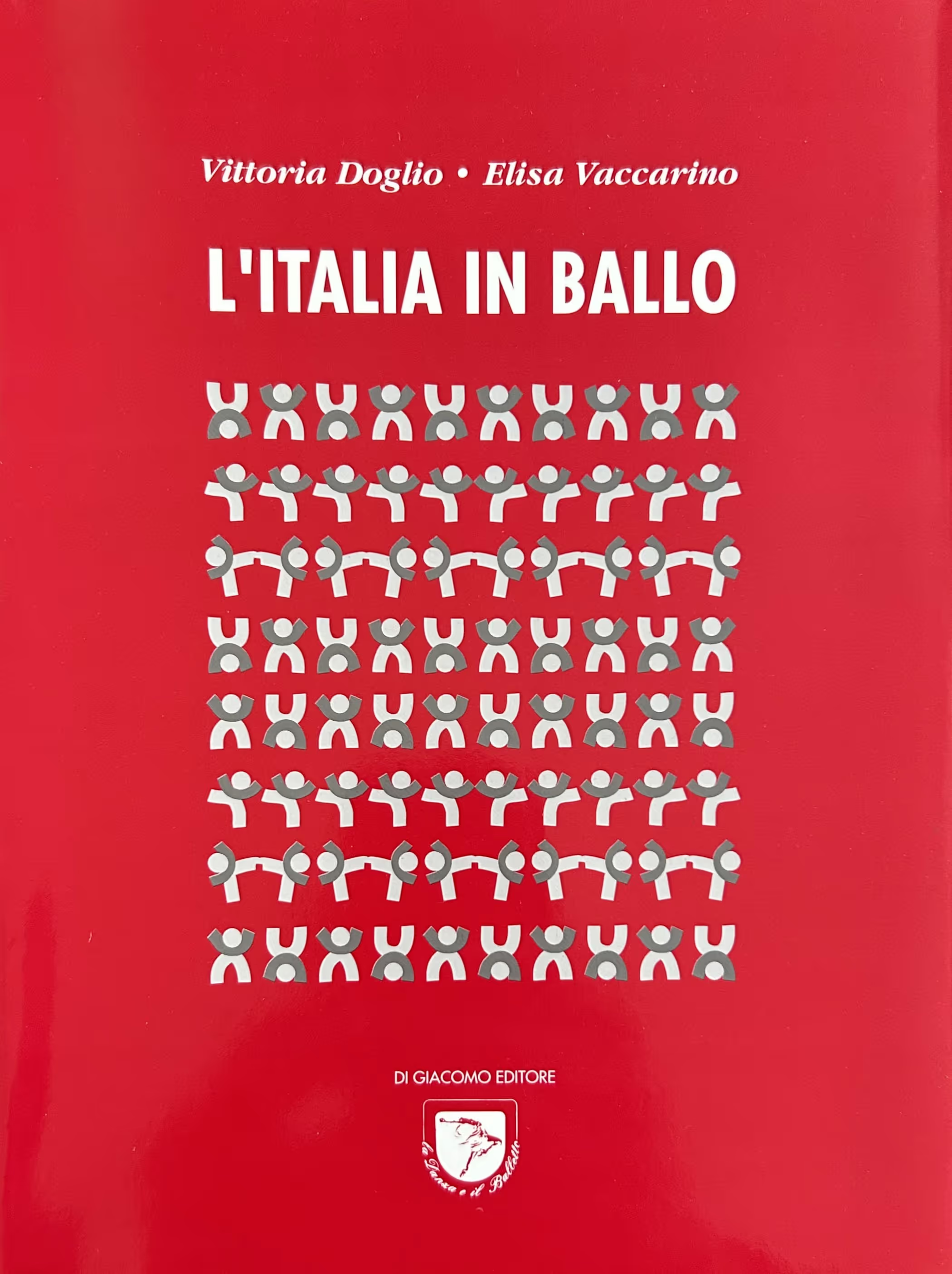
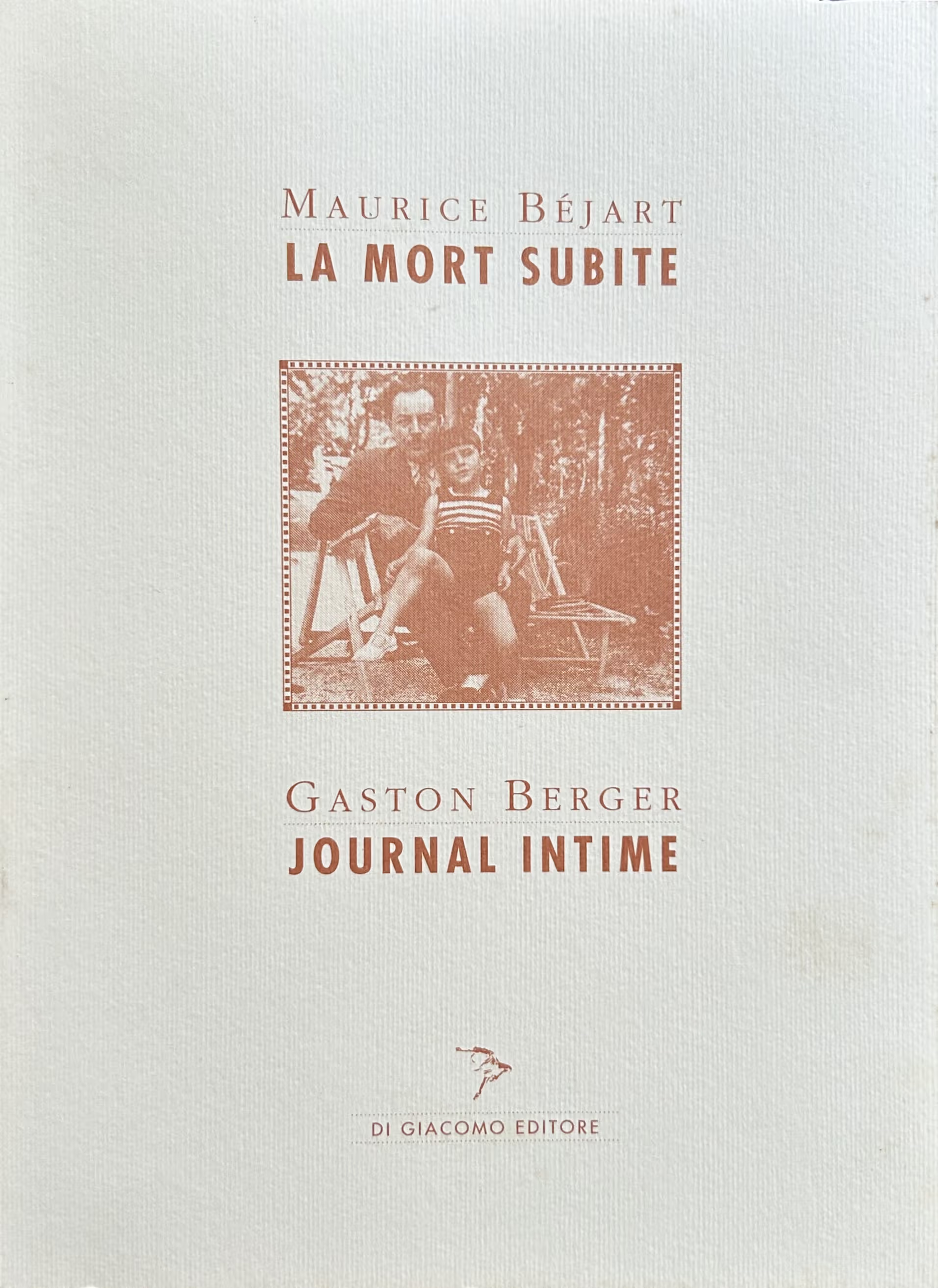
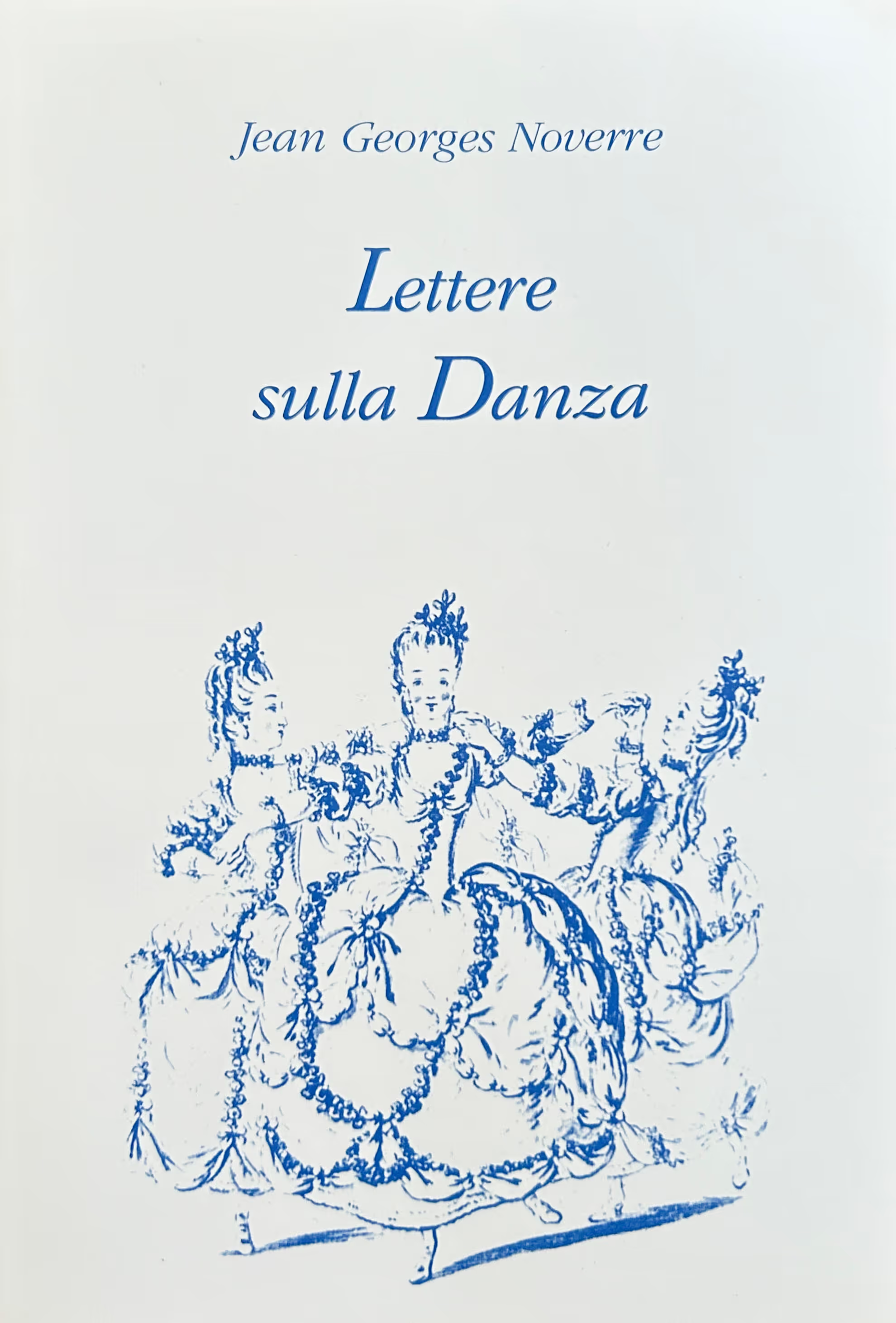
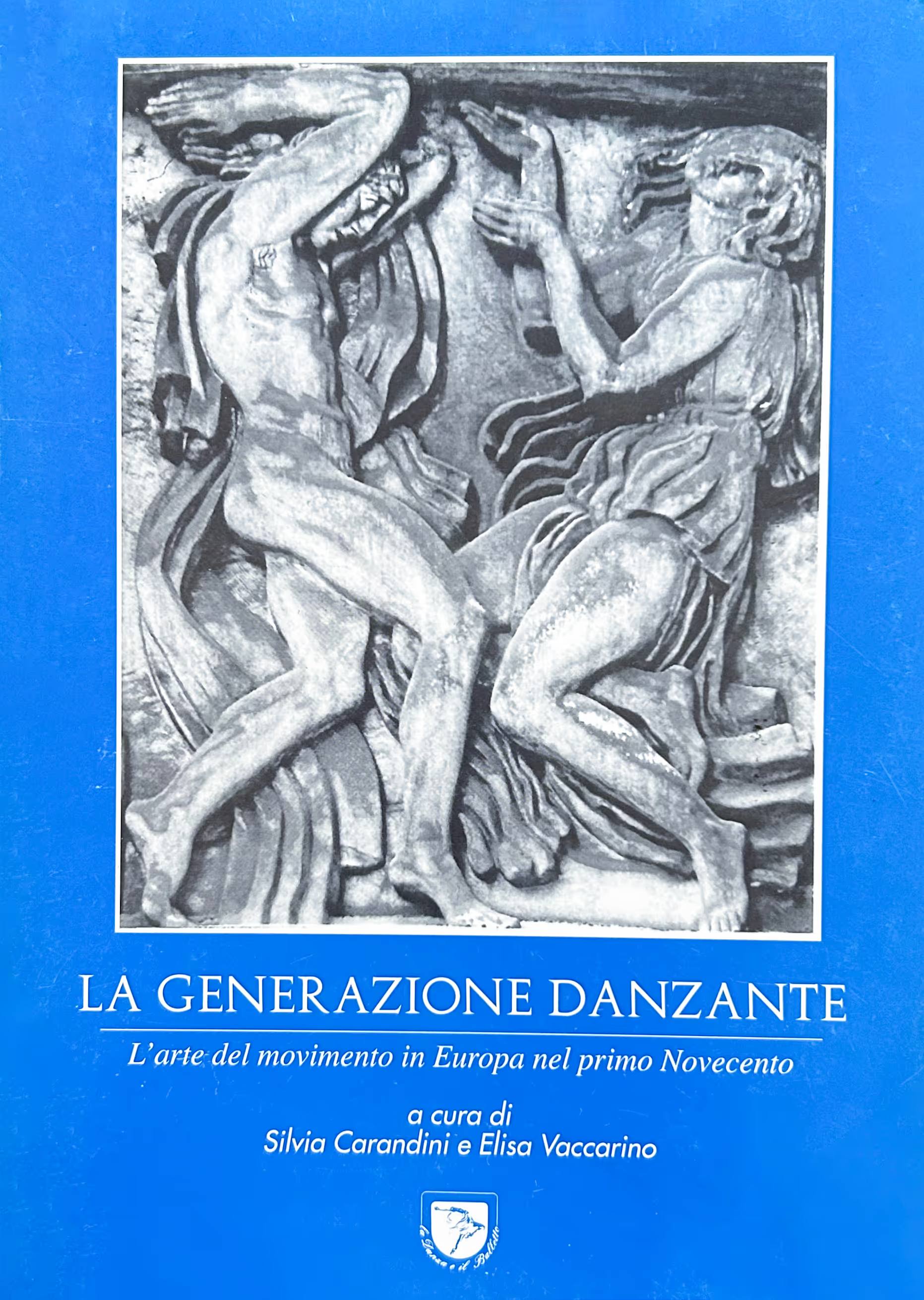
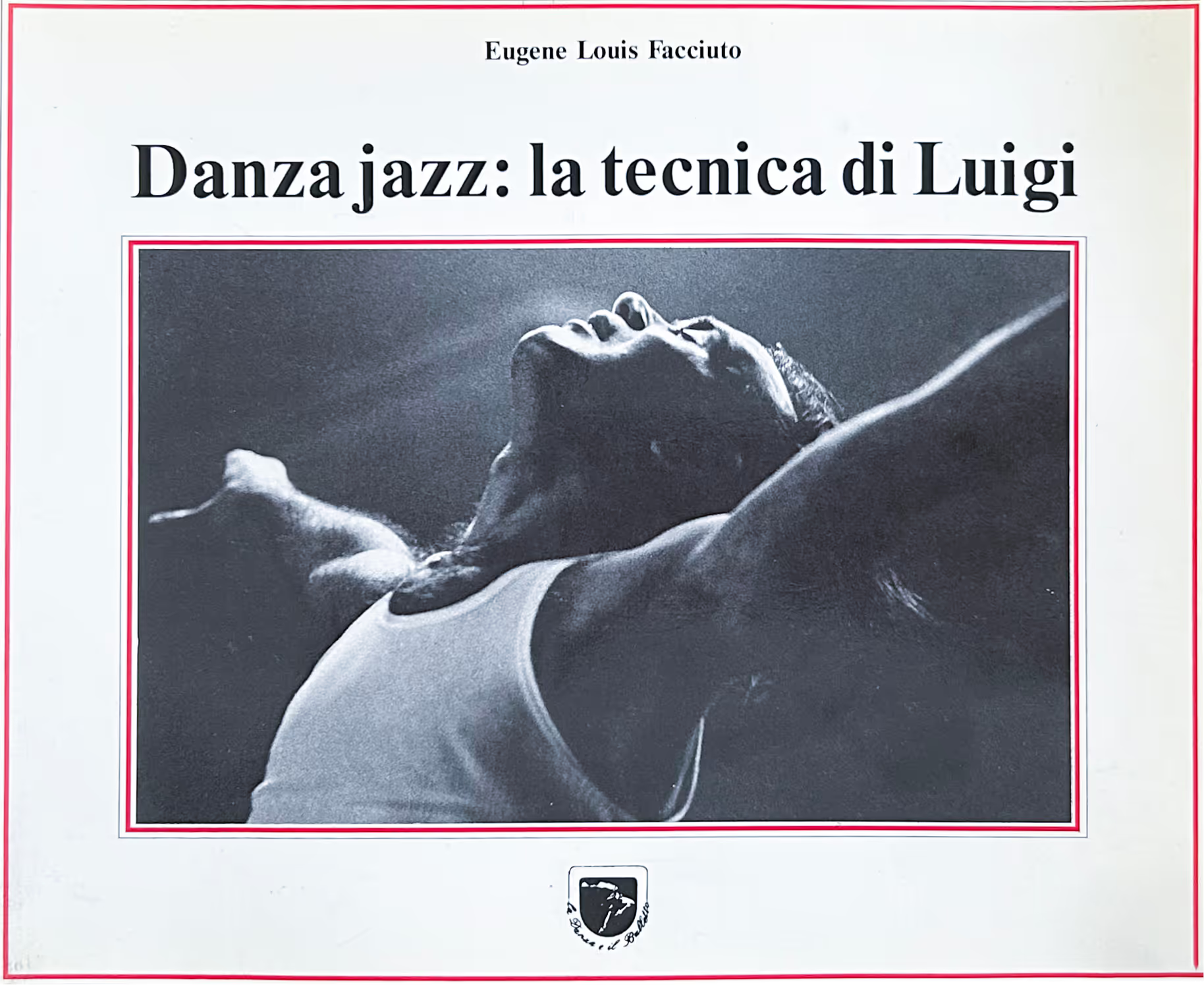
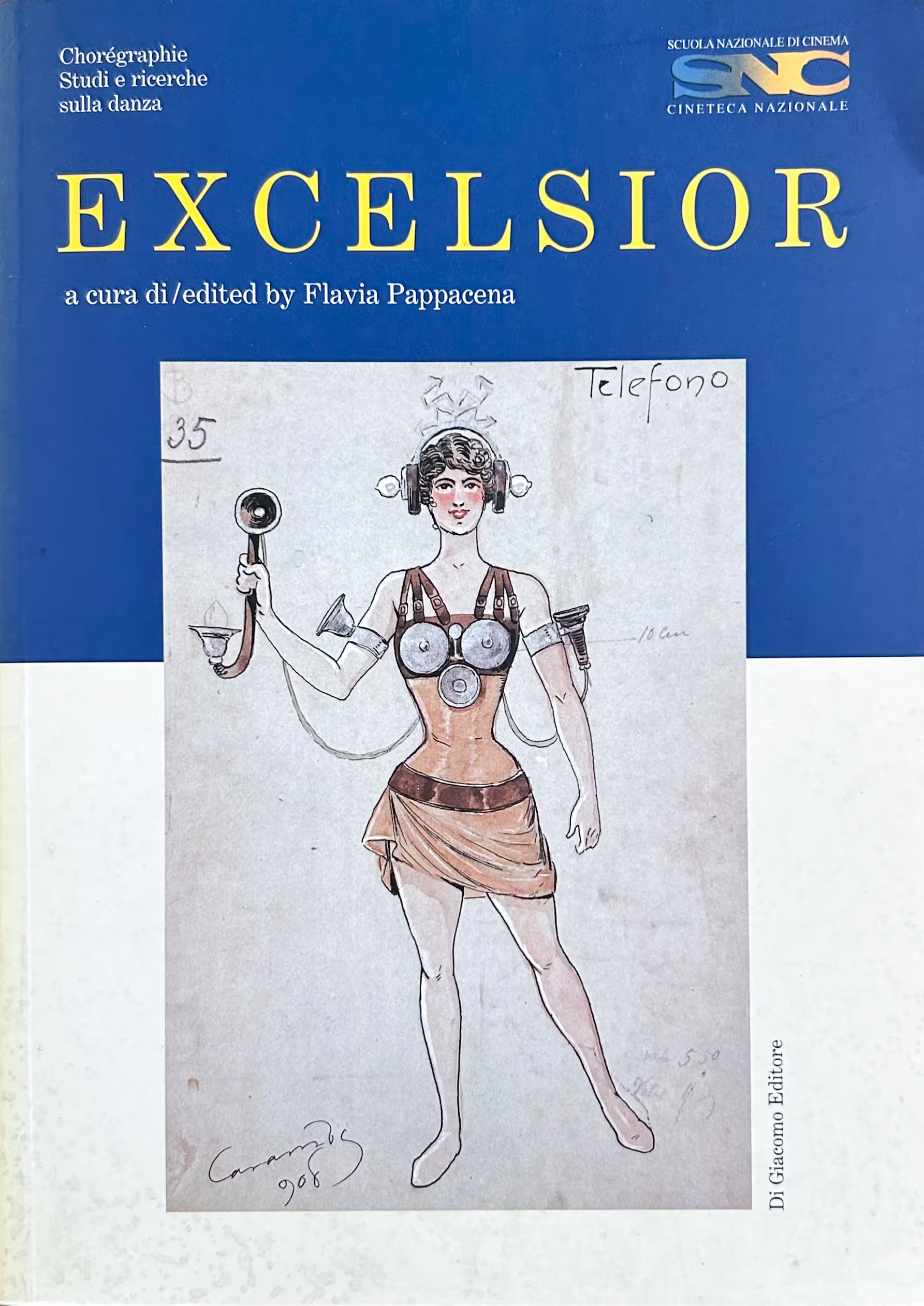
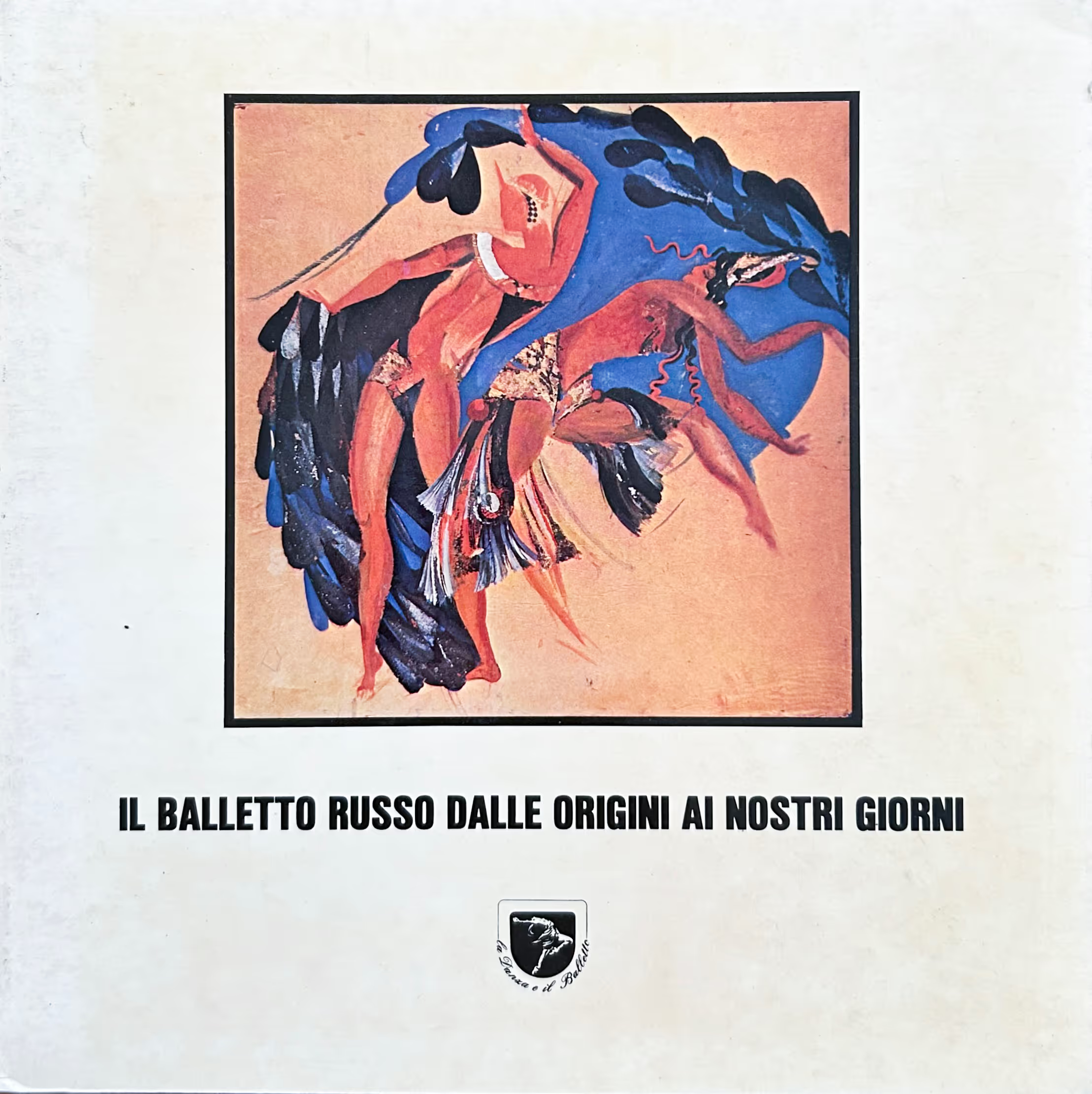
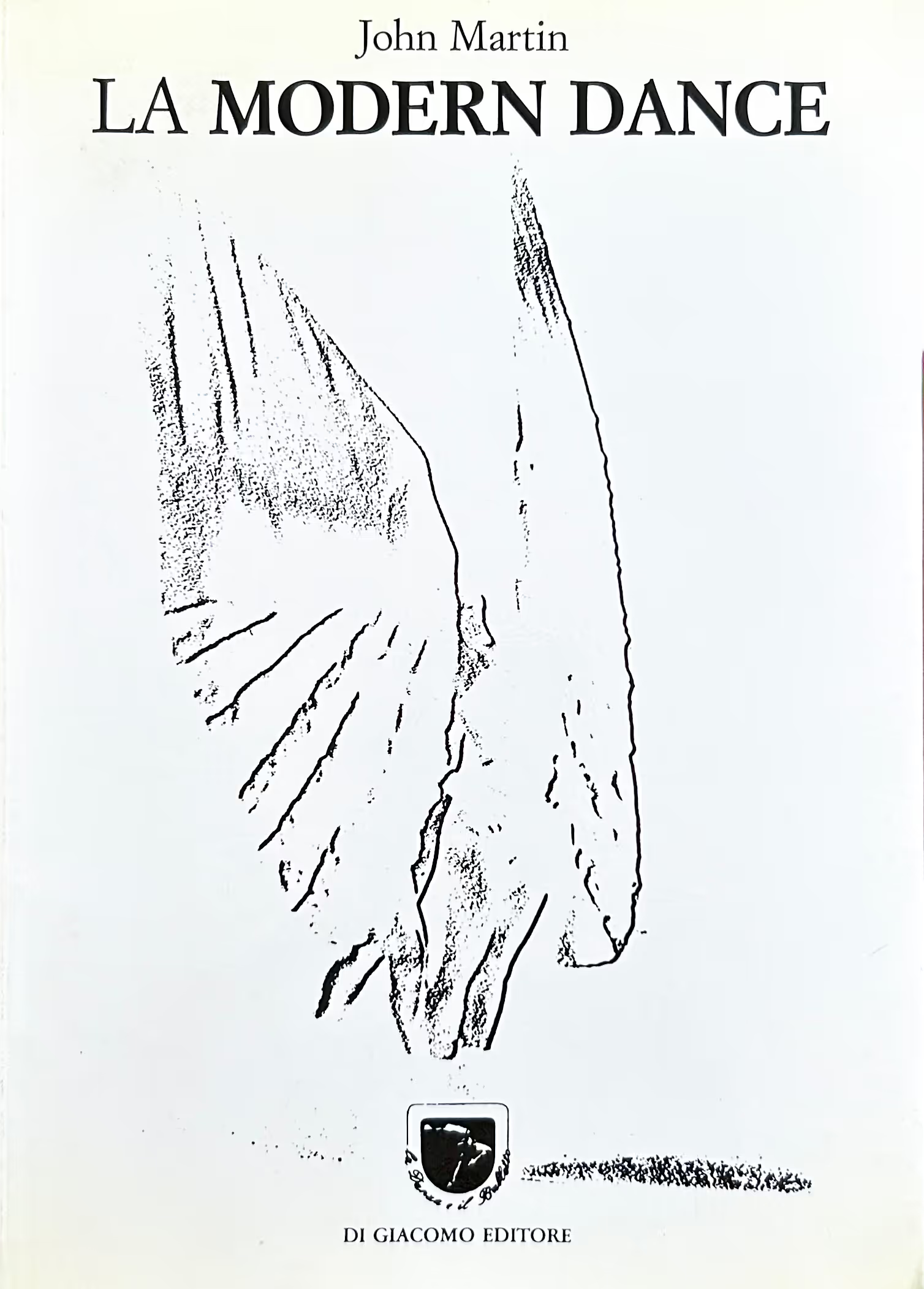
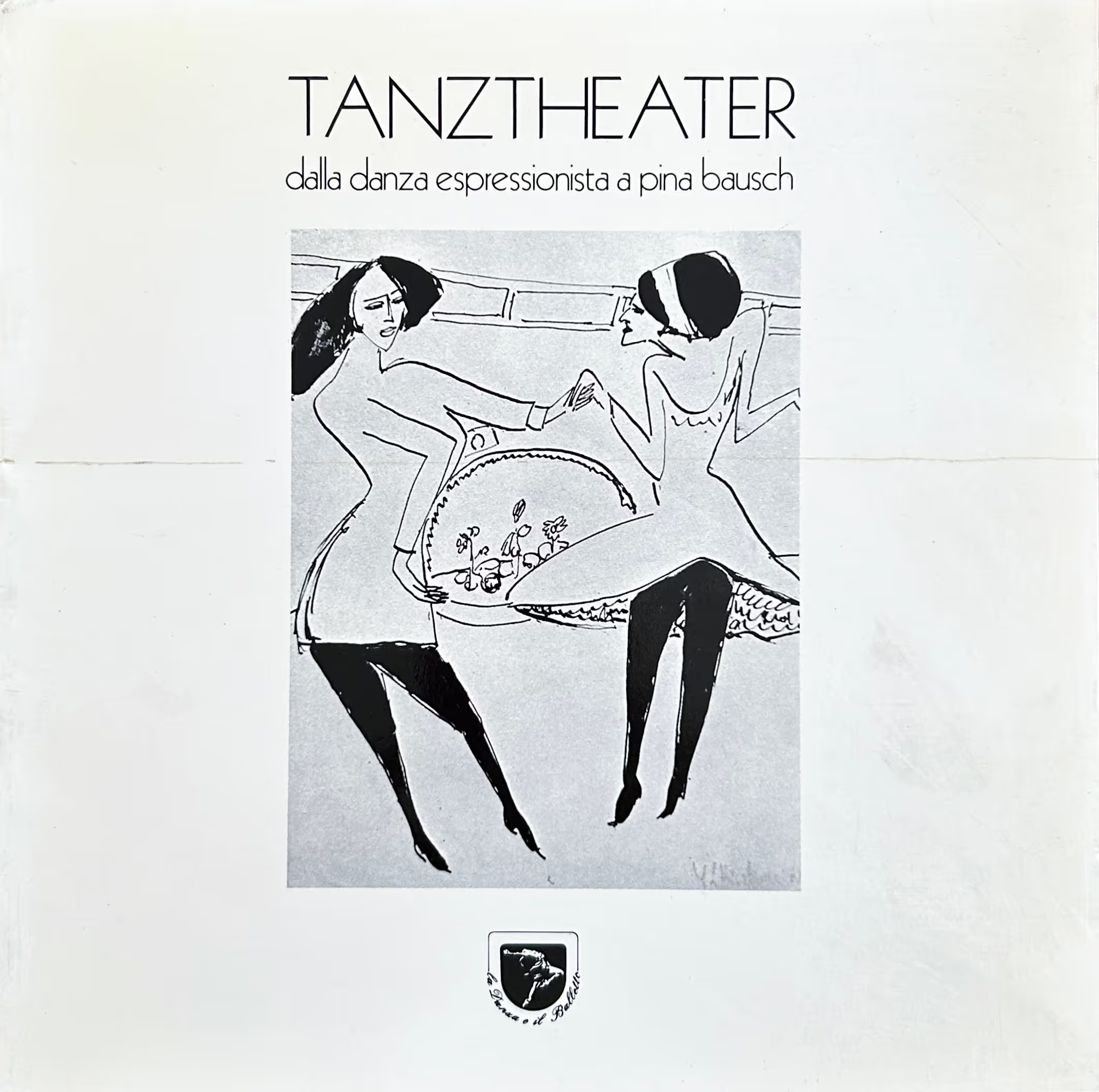
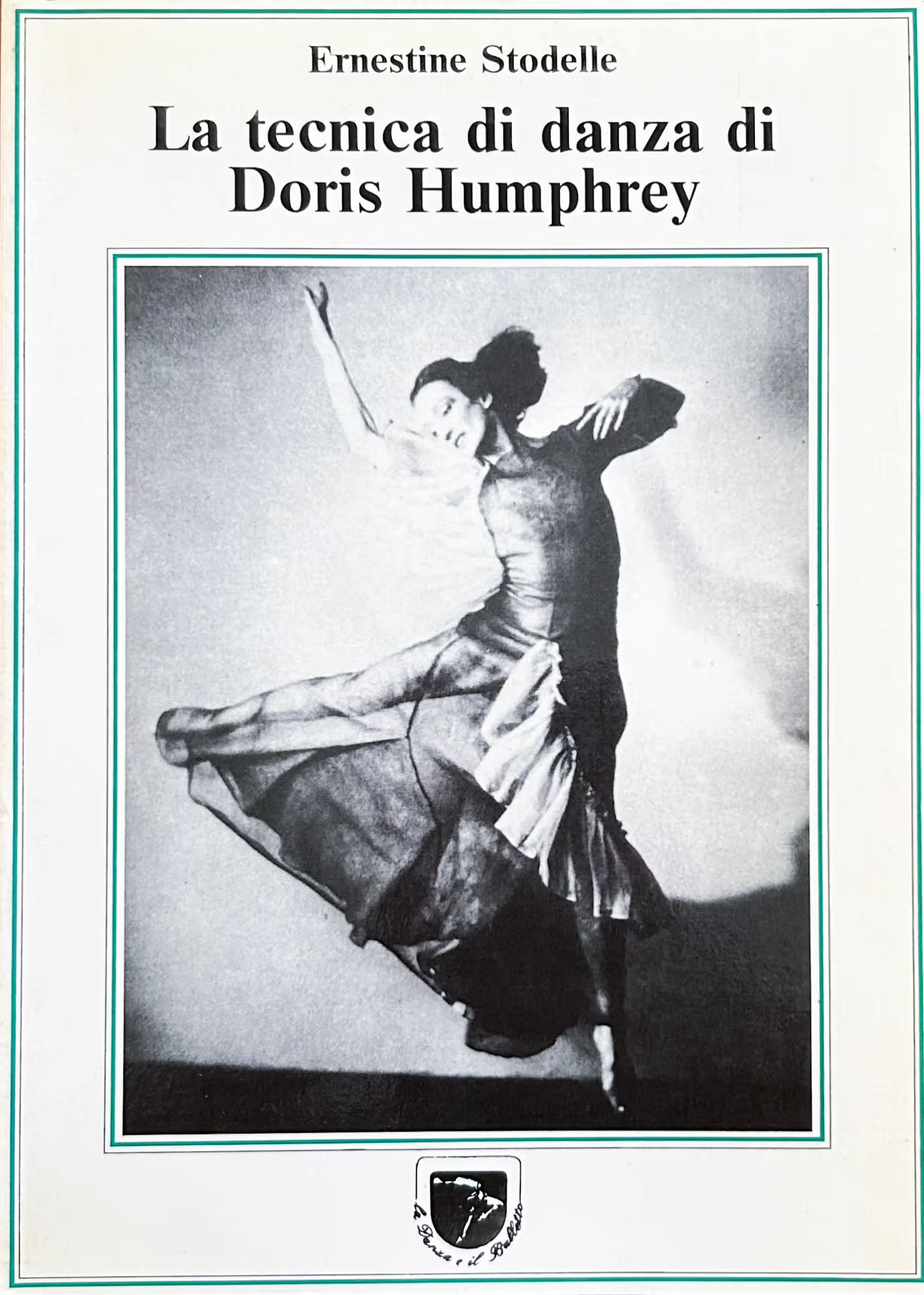
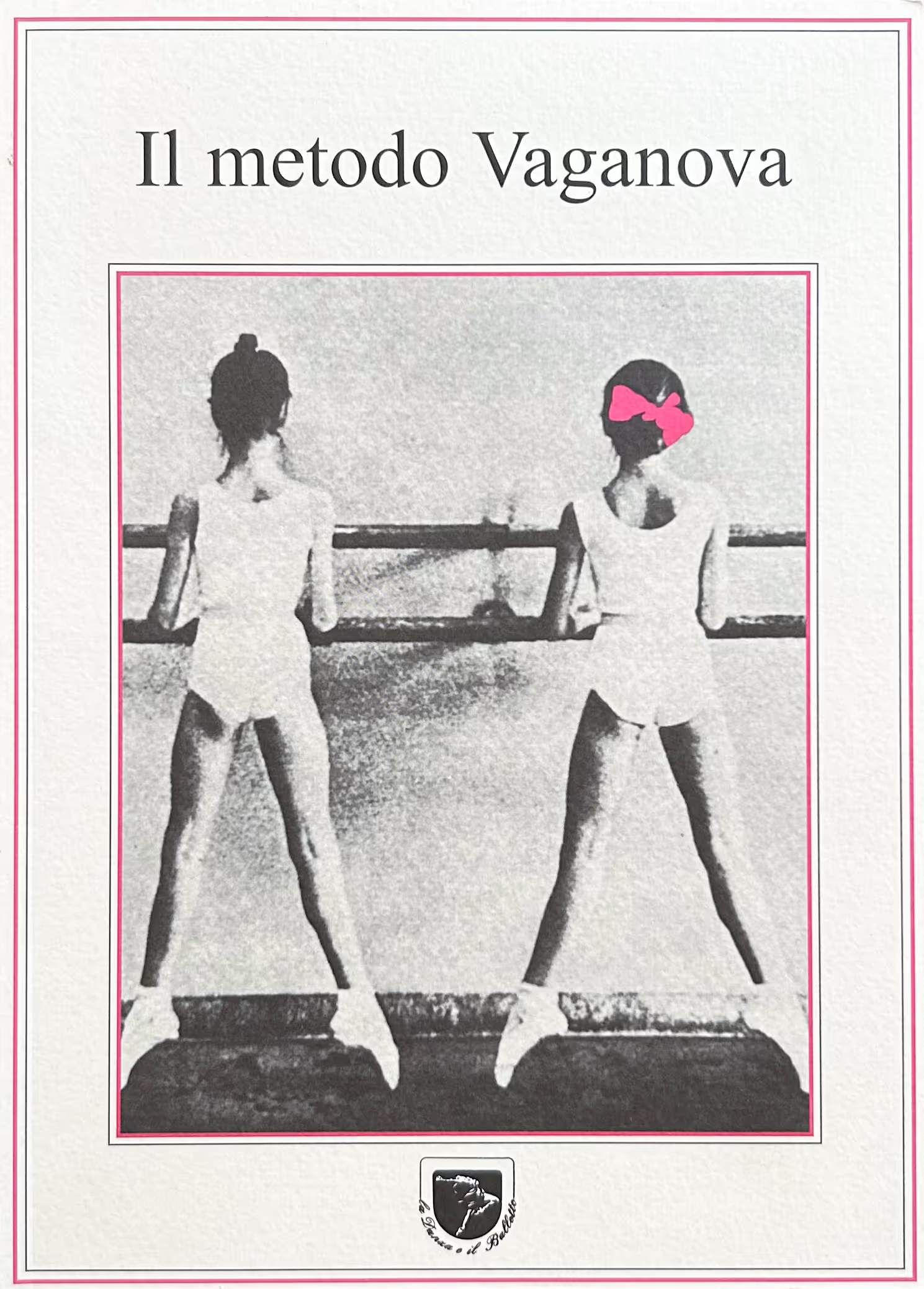
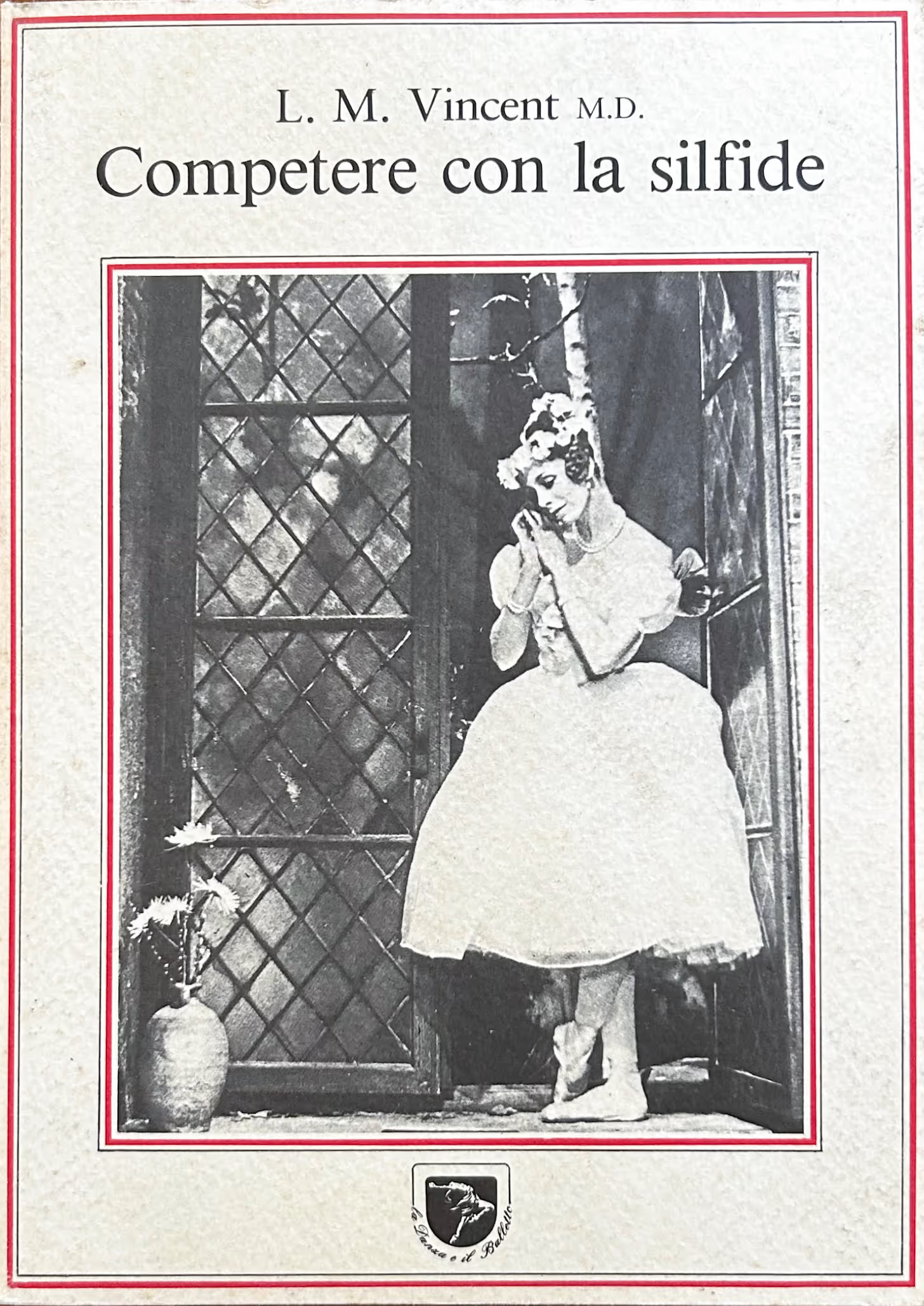
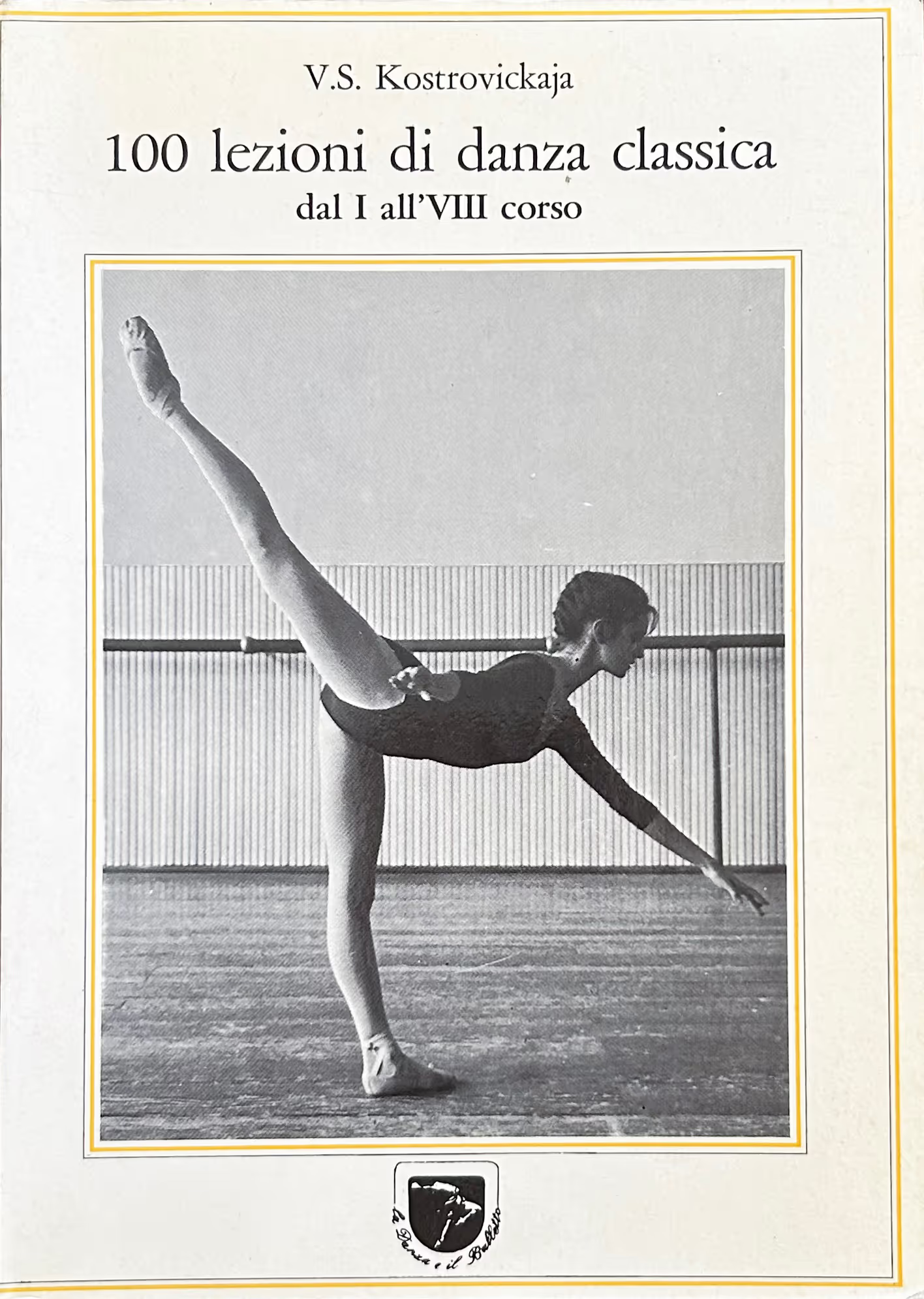
In 1981, together with her sister Maria Grazia, she founded Di Giacomo Editore, a publishing house specialising in classical ballet techniques and the history of cinema. Among its most significant publications were Nureyev, aspetti di un ballerino (1981) by John Percival; Fonteyn e Nureyev (1981) by Alexander Bland; Il rito, la rivolta: il cinema di Nagisa Oshima (1984), edited by Enrico Magrelli and Emanuela Martini; Rosselliniana (1987), edited by Adriano Aprà; and B Dreams. I B Movies: RKO e Monogram. Anni ’30 e ’40 (1990), edited by Vito Zagarrio.
Through its pioneering activity, Di Giacomo Editore established itself within the Italian cultural landscape as a point of reference for dance, receiving important recognition, including the Positano Léonide Massine Prize for the Art of Dance in 1993.

Portrait of Maddalena Di Giacomo by Isabella Watling, 2024, Oil on canvas, 50 x 60 cm

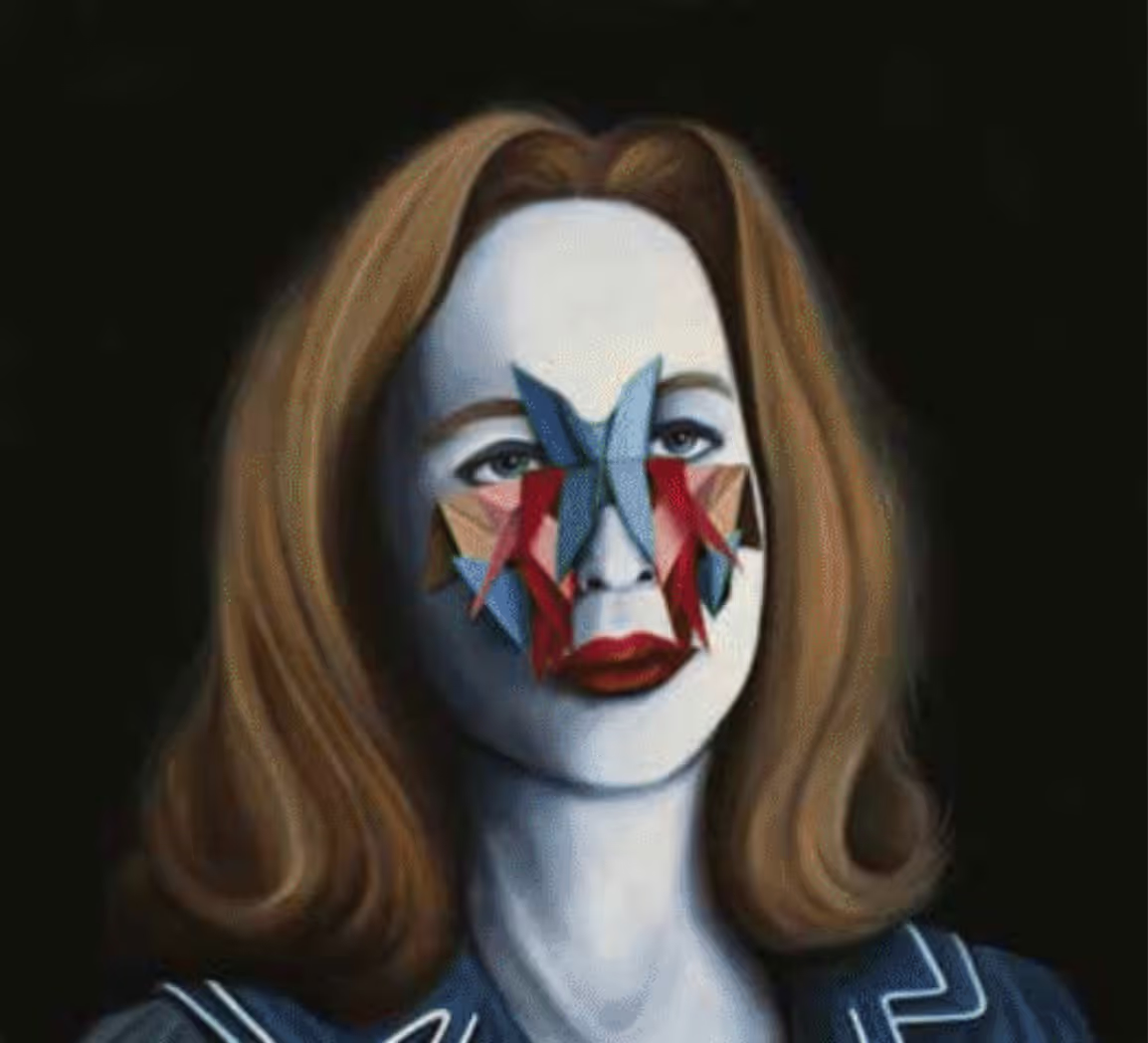
Portrait Of Maddalena Di Giacomo by Silvia Idili, 2022, Oil On Board, 50 x 55 cm
Her meeting with Denis Ganio, étoile of the Opéra de Paris, gave rise to both a lasting sentimental union and a passionate artistic partnership. Together, in 1995, they founded Maison de la Danse in Rome, an international centre dedicated to the training and promotion of young dancers. Their work led to collaborations on numerous productions presented in prestigious theatres, including the Bolshoi Theatre in Moscow and the Arena di Verona.
A devoted collector of eighteenth- and nineteenth-century art, Maddalena assembled throughout her life a collection of female portraits, both miniatures and oils on canvas, alongside antique perfume bottles, painted fans, porcelain and sentimental jewellery. These objects formed the nucleus of what she imagined as a Petit Musée de la Femme.
Through this intimate collection, she sought to trace the changing roles of women in society, celebrate the feminine universe and bring attention to the works and stories of remarkable women artists, so often eclipsed by their male contemporaries.
Her gentle and generous nature also led her to devote much of her entrepreneurial activity to social engagement. Throughout her life, Maddalena supported artists and numerous social causes, including raising awareness of autism, a subject particularly close to her through the deep bond with her sister Maria Grazia and her family.
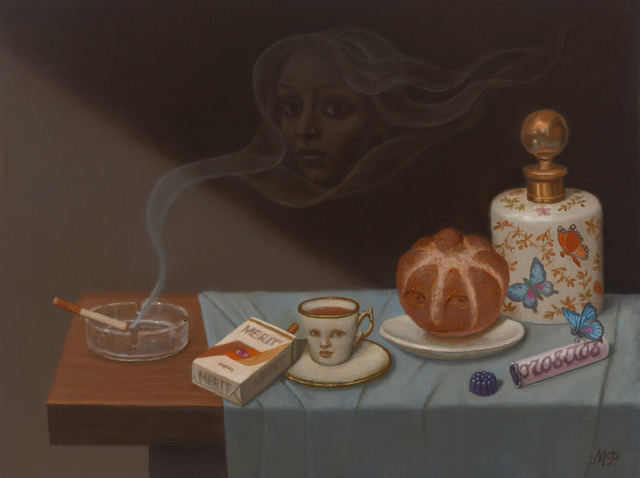
Still Life for Maddalena by Marion Peck, 2026, Oil on panel, 30.5 x 40.5 cm

Portrait of La Più Bella di Napoli by Vincenzo Caprile, c.1892, Pastel on paper, 65 x 70 cm
In 2016, Maddalena’s life was cut short prematurely at the age of 66. In her memory, her daughter, nephews and sister established Fondazione Maddalena Di Giacomo at Palazzo Valier in Venice.
Her collection and her idea for a Petit Musée de la Femme became the intimate nucleus from which the Fondazione’s wider research into memory, sentiment and the intangible would develop. Today, this legacy continues to evolve through new artistic practices, objects, voices and forms of research, exploring the ways in which human beings preserve and transmit what cannot be held: affection, identity, absence and memory.

Maddalena Di Giacomo in la Grande Bellezza
Image by Gianni Fiorito
Our Emblem

Inspired by 18th-century sentimental rings, it carries a message of memory, devotion, and continuity. At its heart, the profile of Maddalena Di Giacomo serves as a symbol of care, transmission, and enduring legacy.
Palazzo Valier & Our Mission
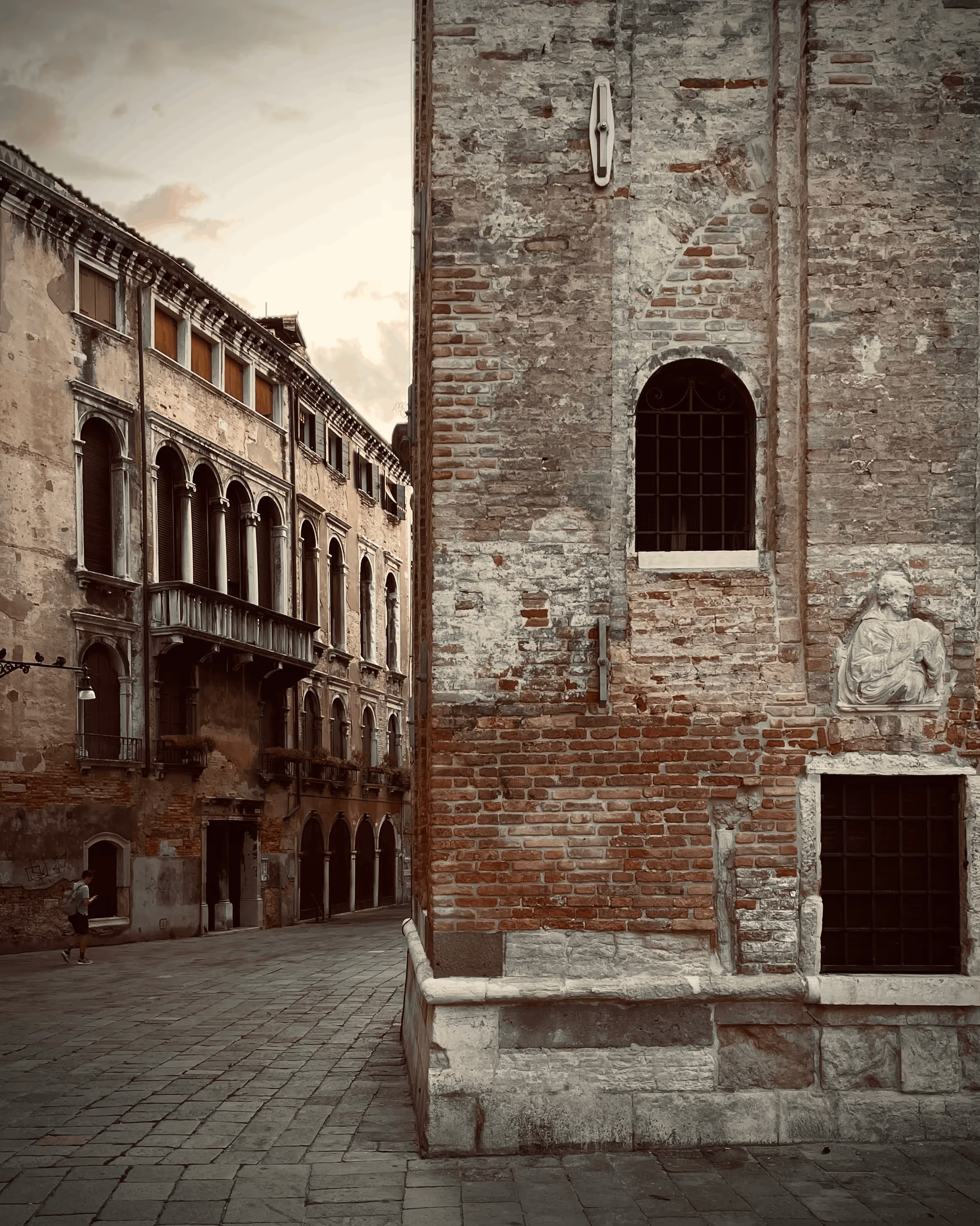
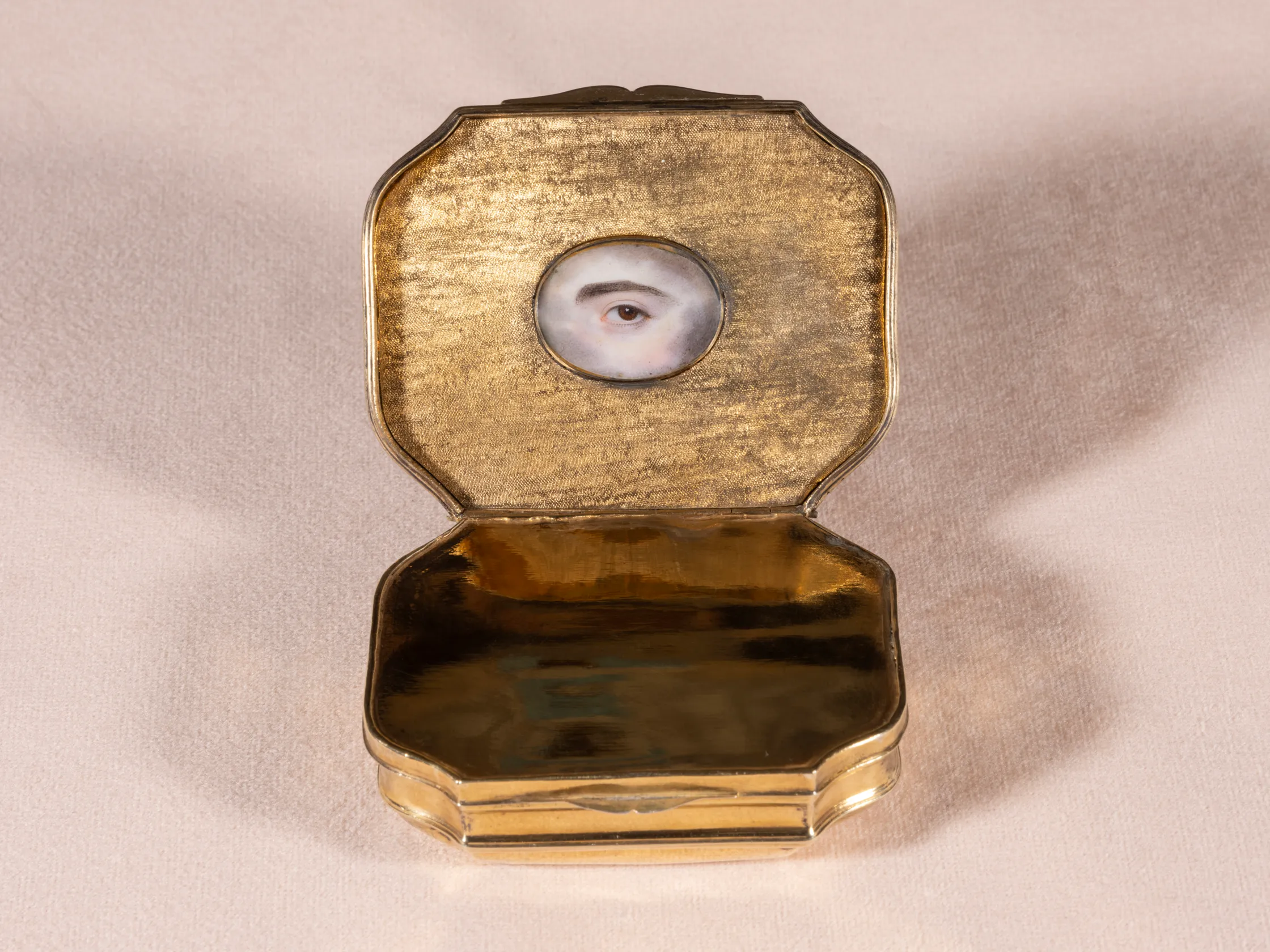

The Maddalena Di Giacomo Foundation is born, a place suspended between life and absence in Venice, which asks us: what are we without our memories?
A daughter's idea dedicated to her mother, as well as a collection of memorabilia and other people's objects that transcends the classic museum nature to become much more. It opens on May 21st, during the Biennale.
by Corinne Corci
April 17, 2026

About Palazzo Valier
The Foundation is headquartered just a few steps from the Rialto, the ancient and vital heart of Venice, on the piano nobile of the Renaissance Palazzo Valier, overlooking the Church of San Silvestro and the eponymous Campo. Built in the early sixteenth century in the Lombard style, the Palazzo takes its name from the Valier family, who purchased it in 1565. This illustrious patrician lineage, which in the second half of the seventeenth century gave the Serenissima two Doges, Bertuccio and Silvestro, retained full ownership of the building for nearly three centuries, until 1849, when a descendant sold part of the property.

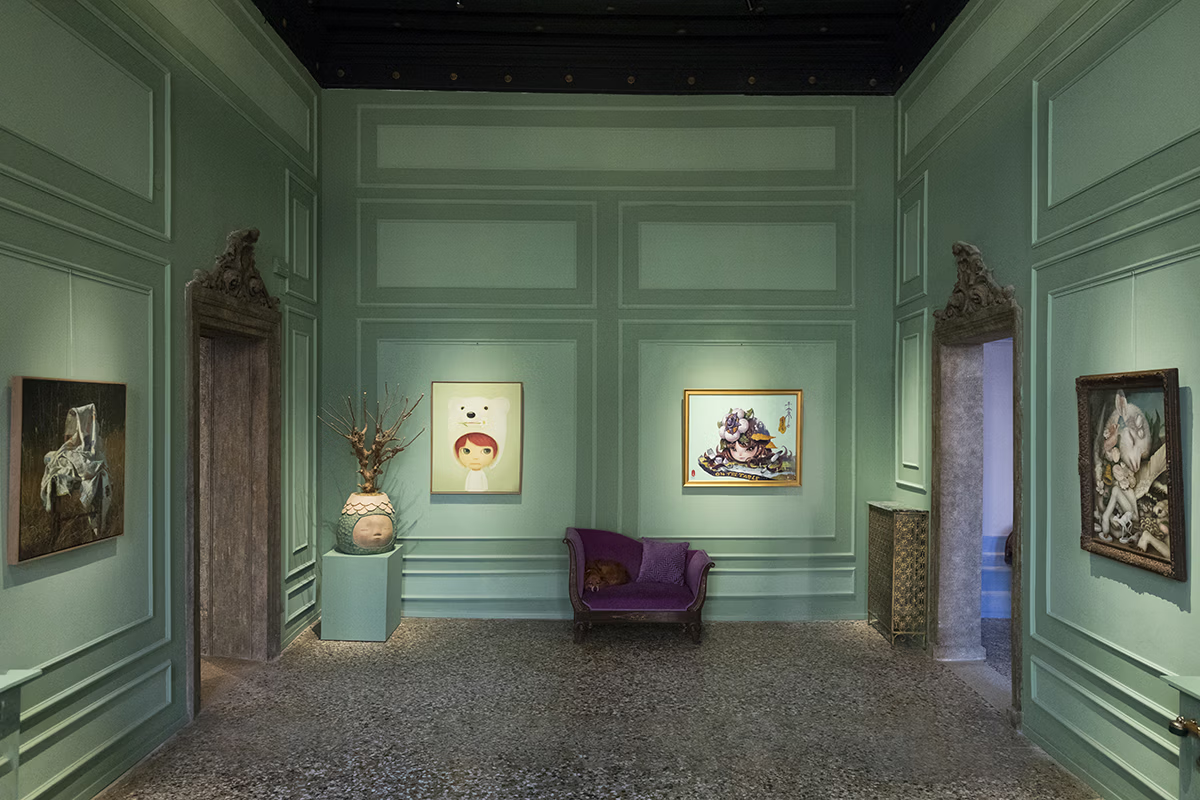
Within this historic edifice, the Foundation pursues its activities across approximately 500 square meters of space, distributed among four large halls, one dedicated to the permanent collection and three to temporary exhibitions, together with a library, an olfactory laboratory, a bookshop, and a guesthouse. The latter is intended to host residencies for artists, curators, and scholars, as well as provide accommodation for members of the Foundation’s board and for collector-patrons who support its mission.
Palazzo Valier still preserves a distinctive genius loci, connected not only to the dogal family but also—and above all—to Giorgione (1478–1510), the enigmatic protagonist of Venetian Renaissance painting, who, according to a long-established tradition, is believed to have lived in this very building. As Carlo Ridolfi recounts in Le Maraviglie dell’arte (1648), Giorgione of Castelfranco spent the final part of his life in a house-studio in Campo San Silvestro, where he would often entertain his friends by playing the lute. He decorated the façade of his home with frescoes depicting poets, musicians, and putti, which aroused such admiration that they earned him the prestigious commission to paint the façade of Palazzo Soranzo in Campo San Polo.
In the summer and autumn of 1510, when the plague swept through Venice, Giorgione contracted the disease from the woman he loved and died prematurely, at only 34 years of age, in his San Silvestro residence.

From the mid-nineteenth century onwards, amid the renewed romantic interest in the figure of Giorgione—whose critical reception was then elevating him into a veritable myth—various guides to Venice, including those by Pietro Selvatico and Vincenzo Lazari, identified Palazzo Valier as the site of his house-studio. This association was not without foundation: at that time, fragments of a fresco depicting putti were still visible on the façade of the palace, recalling closely the description given by Ridolfi of the decorations executed by Giorgione for his home.
Even if certainty regarding his exact residence and the authorship of the frescoes has never been definitively established, Palazzo Valier remains, to this day, the place that tradition continues to regard as Giorgione’s final Venetian dwelling.
Acknowledging the historical and symbolic significance of its seat, the Foundation is committed topromoting research on the figure of Giorgione, paying homage to him through scholarly studies, exhibitions, and cultural initiatives.
The Renovation of Palazzo Valier
Video Credits: Damiàn Laing
The Foundation is housed in Palazzo Valier, overlooking the Church of San Silvestro and its namesake square. Built in the early sixteenth century in the Lombard style, the Palazzo owes its name to the illustrious Valier family of Doges, who purchased it in 1565.
The Foundation’s activities unfold across approximately 500 square meters, distributed among four grand halls—one dedicated to the permanent collection and three to temporary exhibitions—alongside a library, an olfactory laboratory, a bookshop, and a guest apartment intended to host residencies for artists, curators, and scholars.
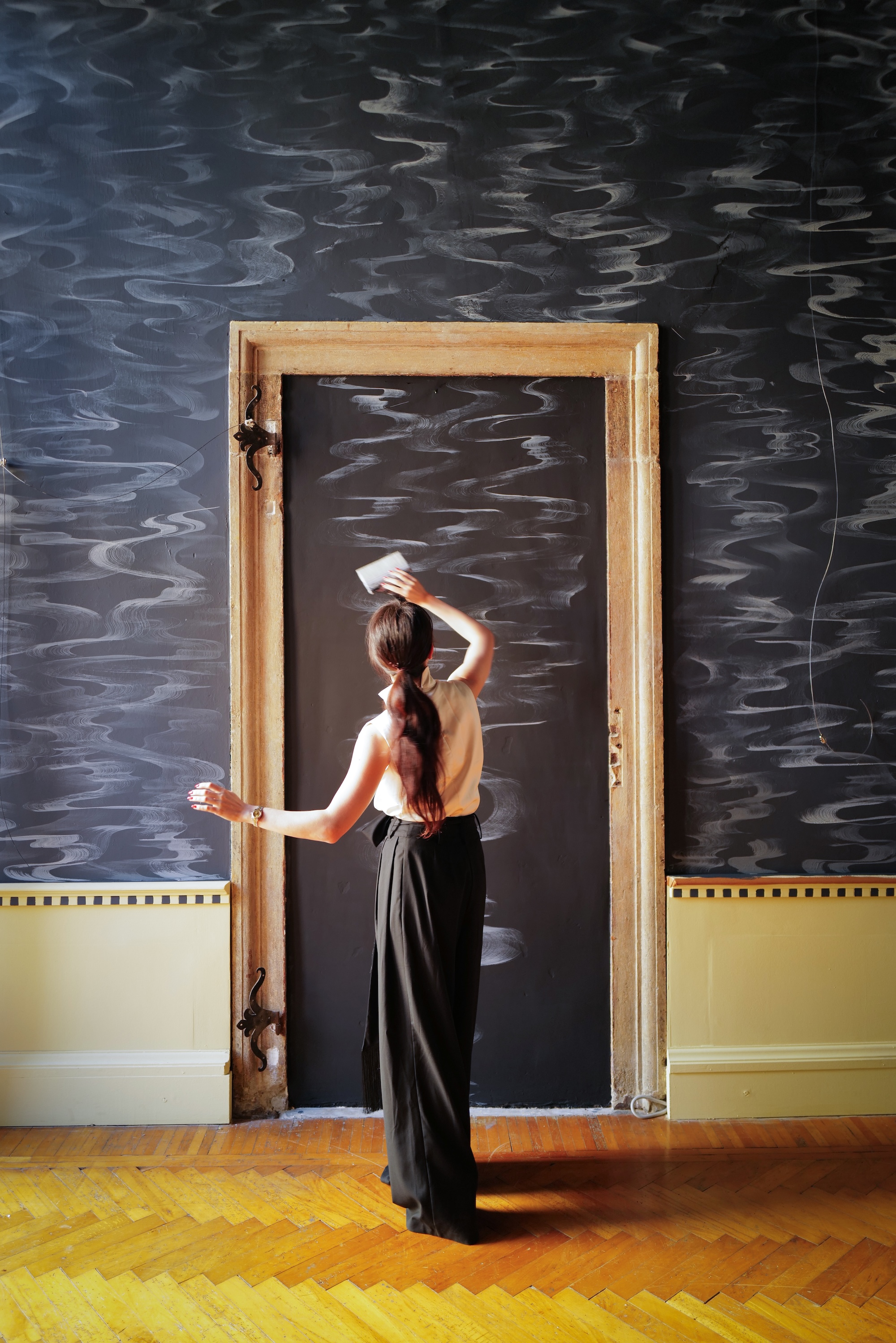
In the conservation and restoration of the Foundation’s interiors, director and curator Alexandra Mazzanti collaborated with renowned British designer Rachel Chudley, giving life to a dialogue between contemporary taste and the identity of English Heritage, balanced in chromatic harmony and historical sensitivity. The design choices reflect a deeply eco-sustainable approach that respects tradition while engaging exceptional European and international artisans. Among them are Ornalys in Paris, which still produces bronze decorations from original eighteenth-century drawings; the Venetian team Porte Italia, specialists in trompe-l’œil and classically inspired furnishings; ARD, supplier of natural paints; and Moldart Design, a family-run Turkish company handcrafting refined decorative stuccoes. Silks and fabrics by James Hare, the prestigious English brand, complete an ensemble that celebrates the continuity between the Orient, innovative design, and material memory.
Palazzo Valier still preserves a distinctive genius loci tied to Giorgione (1478–1510), the enigmatic master of Venetian Renaissance painting, who—according to long-standing tradition—spent the final part of his life in a house-studio within the Palazzo, where he would entertain friends while playing the lute.
With the Support Of







Our Mission
How do we preserve the intangible?
Exploring the languages, codes and devices through which memory takes form and is transmitted.
Across cultures and generations, human beings have created objects, images, gestures and rituals to retain a trace of what cannot otherwise be held. Fondazione Maddalena Di Giacomo takes this universal impulse as the starting point for its research.
Works of art, portraiture, miniatures, sentimental jewellery, scent, correspondence, photography, music, voice, personal objects and rituals are approached as devices of memory: material and sensory forms through which affection, absence, belonging and identity can survive, travel across time and acquire new meaning.
The Fondazione develops interdisciplinary research at the intersection of art, sensory heritage, neuroscience and mental wellbeing, investigating perception and aesthetic experience through multisensory approaches and with particular attention to neurodivergence and different ways of perceiving, feeling and remembering.
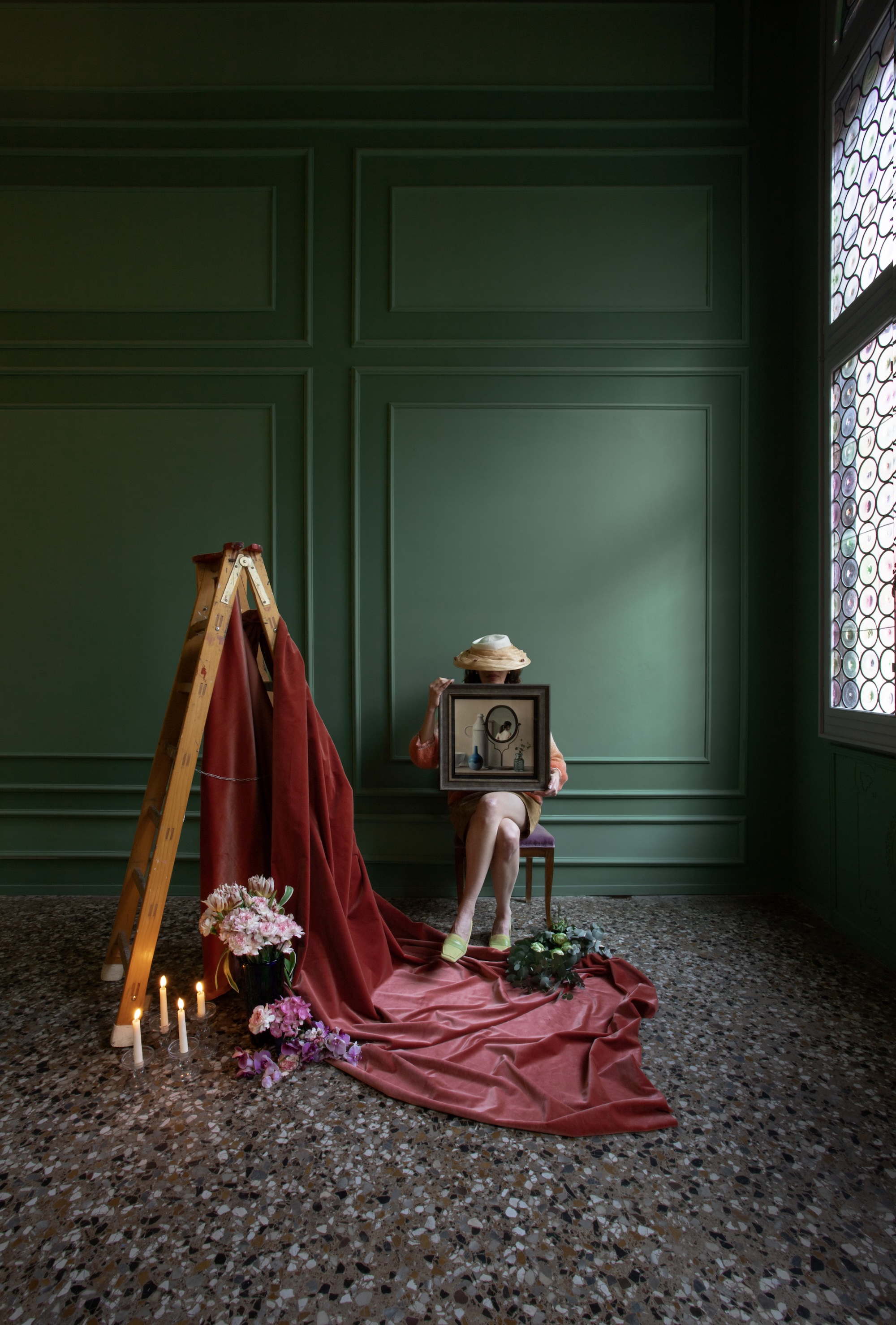
© Mina Scuderi

© Mina Scuderi
I'ts programme unfolds through exhibitions, artist residencies, concerts and symposia, alongside scientific and literary publications, archives and collaborations with universities, academies, conservatories and research institutions. Conservation, restoration and the study of artworks and objects form an integral part of this work, connecting the transmission of material heritage with that of intangible experience.
Born from a personal experience of memory and absence, the Fondazione expands this origin into a collective field of research, gathering different histories, cultures and forms of remembrance. Historical objects and contemporary artistic practices are placed in dialogue, allowing memory to emerge not simply as a record of the past, but as a presence continually reactivated through objects, senses and experience.
The first expression of this research is The Missing Note, which explores absence as a perceived presence and opens a wider investigation into the forms through which what is no longer physically present continues to inhabit individual and collective memory.
Guided by its international Scientific Committee and developed with artists, art historians, researchers and specialists, the Fondazione reflects the cosmopolitan spirit of Venice and its historic vocation as a meeting point between cultures, languages, knowledge and exchange.
Salon de la Memoire
Membership to Le Salon de la Mémoire is strictly regulated to ensure the highest standards of discourse and engagement.
Applicants are selected from individuals for whom art is a central pillar of their lives, including collectors, curators, art professionals, and passionate advocates of artistic exploration.
By fostering a community of like-minded individuals, the Salon offers a unique opportunity to engage in profound cultural exchanges and build meaningful connections.