LA NOTA MANCANTE
LA NOTA MANCANTE
Inaugural Exhibition of Fondazione Maddalena Di Giacomo
On view until 21 November 2026
Your Visit to La Nota Mancante
An intimate and immersive experience at Palazzo Valier.
Currently on view at Fondazione Maddalena Di Giacomo in Venice, La Nota Mancante invites visitors to discover the Fondazione’s inaugural exhibition alongside the permanent Maddalena Di Giacomo Collection within the historic setting of Palazzo Valier.
Each visit lasts approximately one hour and is reserved for a maximum of 15 visitors per time slot, allowing guests to experience the exhibition and collection in an intimate and contemplative atmosphere.
Your admission includes:
- Access to La Nota Mancante and the exhibition spaces of Fondazione Maddalena Di Giacomo.
- A one-hour visit, with a maximum of 15 guests per time slot.
- A complimentary Fondazione Maddalena Di Giacomo tote bag, offered as a keepsake of your visit.
Availability is limited for each time slot. Advance booking is recommended.
LA NOTA MANCANTE: INAUGURAL EXHIBITION
Currently on view at Palazzo Valier, La Nota Mancante is the inaugural exhibition of Fondazione Maddalena Di Giacomo, conceived as a meditation on memory and on the subtle sensory traces through which memory continues to inhabit the present.
Opened on 21 May 2026, the exhibition marks the beginning of the Fondazione’s programme and introduces its interdisciplinary vision, bringing together historical and contemporary art, sensory research and the permanent collection assembled by Maddalena Di Giacomo and her family.
Memory rarely survives as a complete image; rather, it returns in fragments through atmospheres, sensations, and fleeting impressions that resist language. A scent remembered but impossible to name, a sound that lingers in the mind, the emotional residue of a gesture or a face: La Nota Mancante begins from this condition, from the awareness that what is missing often resonates more deeply than what is fully present.
Since the earliest civilizations, art has offered humanity a subtle passage beyond the visible world, a kind of secret threshold, not unlike the elusive elixirs once pursued by alchemists. Through it, we momentarily step outside the confines of ordinary perception and enter a dimension where memory, imagination, and sensation intertwine, where absence itself may acquire form and resonance. In this sense, art is never merely ornament or diversion; it is a quiet companion in the human search for meaning, a balm for the restless spirit, and an invitation to cultivate a deeper attentiveness to the invisible textures of experience.
Set within the piano nobile of Palazzo Valier, the exhibition unfolds as a multisensory journey exploring the paradox through which absence may become one of the most powerful forms of presence. It draws inspiration from what might be described as the “music of silence”, echoing the poetic intuition of Isabella d’Este’s Impresa delle Pause, in which pauses and intervals carry meaning equal to that of sound itself. The “missing note” thus becomes a metaphor for that which remains unresolved, suspended between disappearance and recollection, much like a taste or a fragrance that can no longer be clearly identified yet persists vividly in the mind.
At the heart of the project lies a dialogue between visual art and sensory research. The exhibition is informed by the work of art historian and sensory curator Caro Verbeek, whose research has explored the historical and perceptual role of scent in the experience of art, and by a collaboration with IFF, under the creative direction of Bernardo Fleming. Through this collaboration, a series of fragrances has been developed in response to selected works and spaces within the Fondazione, creating an invisible sensory layer that accompanies the visitor throughout the exhibition.
Rather than functioning as a supplementary device, fragrance becomes a central element of the exhibition’s language, a vehicle of memory capable of bridging the intimate and the historical, the personal and the collective. Alongside touch, sound, and taste, it contributes to an expanded museum experience in which perception moves beyond the purely visual and opens toward a more intimate and embodied encounter with the work.
The exhibition begins in a threshold space dedicated to desire, The Wish, where a selection from the Fondazione’s perfume flacons collection is presented as a time capsule of memory. Here scent becomes both archive and emotional trigger, inviting visitors to enter a reflective state before the exhibition unfolds. Within this space appears Tiffany Bouelle’s experiential work It’s My Party and I’ll Cry If I Want To, which introduces the emotional tone of the Fondazione: vulnerability, transformation, and the generative force of fragility.
The journey then opens into the room Le Jour et la Nuit, dedicated to the theme of vanitas and to the tension between light and darkness. Here works by masters such as Jacob Marrel, Vittorio Matteo Corcos, and Vilhelm Hammershøi enter into dialogue with contemporary artists including Fatima Ronquillo, Kenne Gregoire, and Riikka Sormunen, creating a layered reflection on time, mortality, and the persistence of beauty.
The path continues into Between Two Trees, inspired by the generative force of nature and by the poetic idea of encounter. In this space works by Sally J. Han and Clémentine De Chabaneix enter into conversation with the sculptural language of Claude Lalanne, exploring the delicate boundary between dream, nature, and imagination.
The exhibition culminates in Jeux d’Eau, inspired by the fluid musical language of Maurice Ravel. Here the immersive installation by Peter de Cupere reflects on time, femininity, and the theme of levitation, unfolding in dialogue with delicate female figures by Marie Laurencin, Vivian Maier, and Carl Holsøe, whose works overlook the luminous view of the Grand Canal.
The final chapter of the exhibition is presented in the Fondazione’s Chemical Lab, where an extraordinary porcelain bouquet by sculptor Anna Volkova appears alongside part of the historic Lalique perfume bottle collection, extending the exhibition’s meditation on scent as both material presence and vessel of memory.
The exhibition unfolds through a dialogue between historical works and contemporary artistic practices, bringing into conversation paintings and artefacts from the seventeenth to the early twentieth centuries with works by contemporary artists whose research engages with perception and the language of the senses. Yet La Nota Mancante is not conceived as a sequence of isolated displays. Instead, its works are interwoven throughout the Fondazione with the permanent collection assembled by Maddalena Di Giacomo and her family, creating a continuous dialogue across centuries.
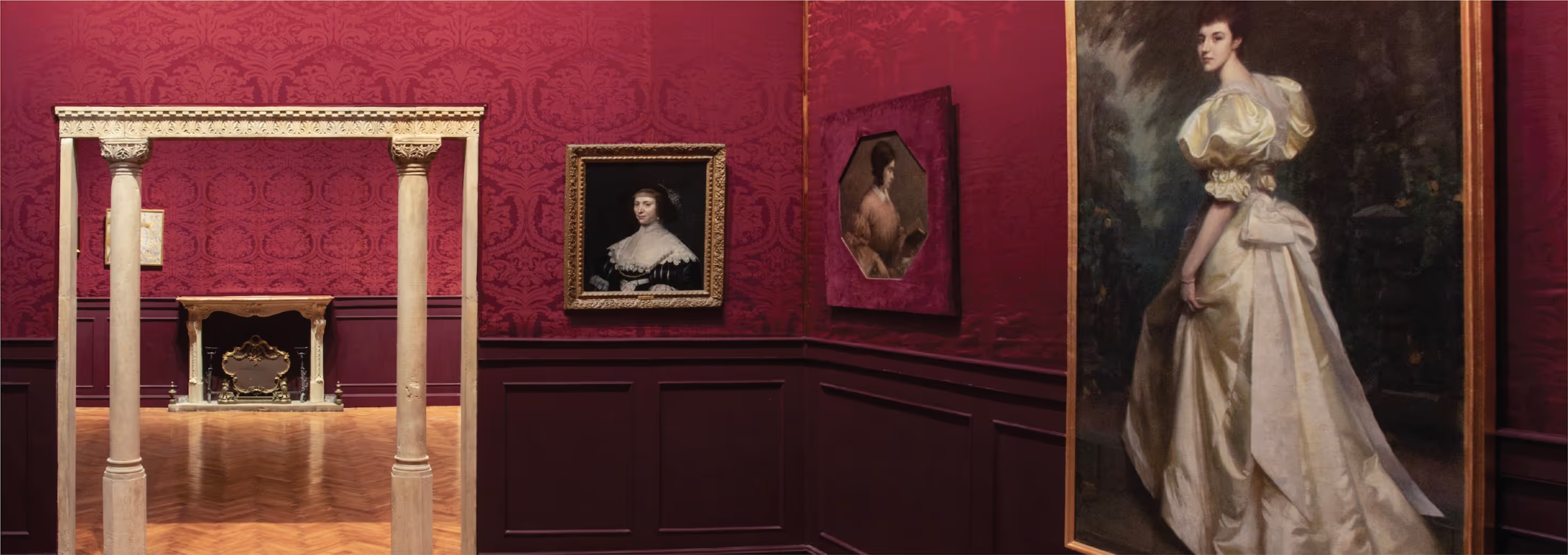
The rooms of the permanent collection, opened to the public for the first time on the occasion of La Nota Mancante, form an integral part of the visitor experience. Within the two red damask rooms dedicated à L’Amitié to portrait miniature scholar Michele Bernardi, women artists and female portraiture emerge as central protagonists, with masterpieces by Thérèse Schwartze, Marie-Gabrielle Capet, Anne Mee, and Eugénie Servières. Across both large-scale paintings and intimate miniature formats, the female subject emerges as a central icon of memory, identity, and representation.
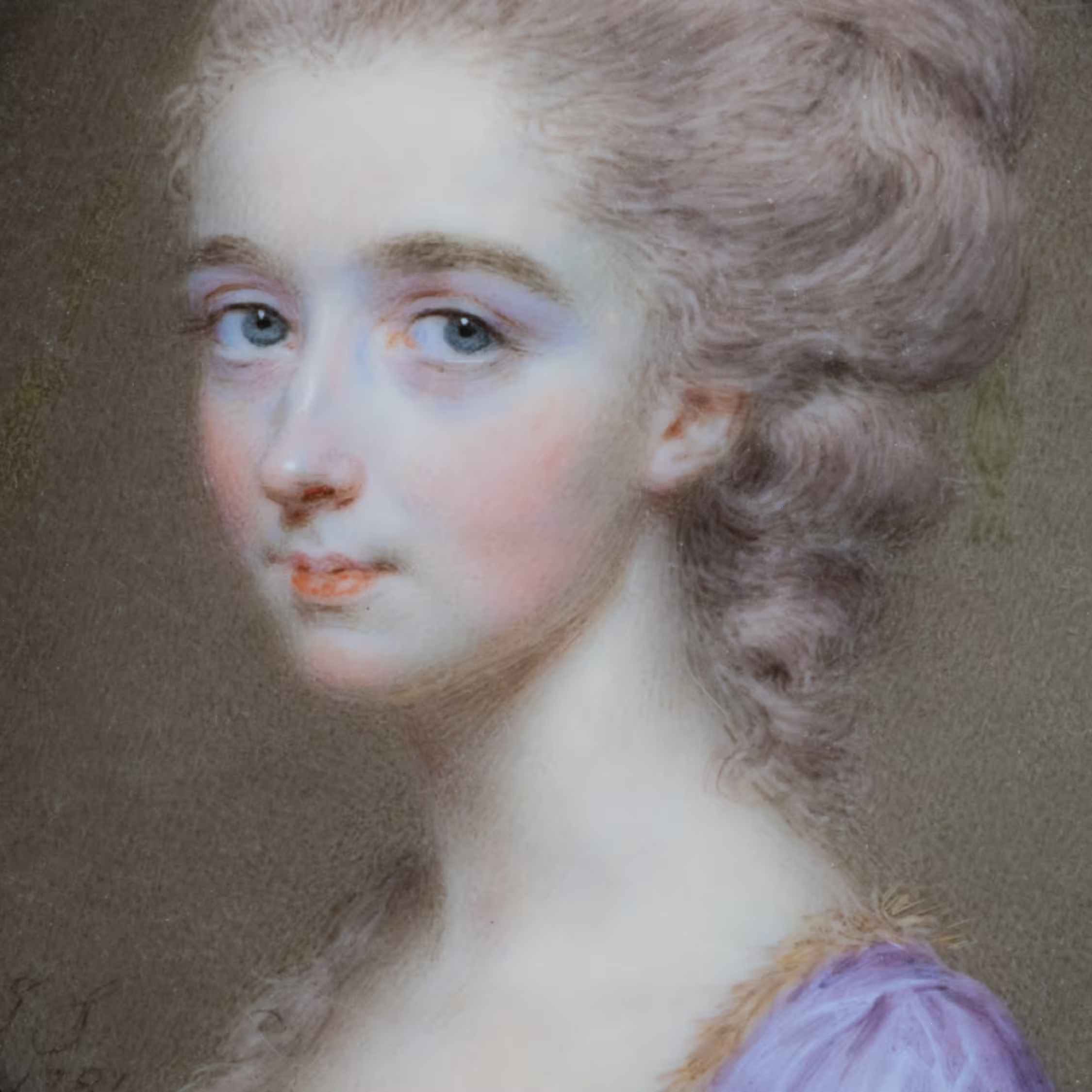
At the heart of this dialogue lies the collection that Maddalena Di Giacomo conceived as part of her lifelong vision for a Petit Musée de la Femme: a remarkable nucleus of eighteenth- and nineteenth-century portrait miniatures and sentimental jewellery that functions as an eternal token of Love and Friendship. Through these intimate objects — miniature portraits, mourning jewels, Lover’s Eyes, and rebus rings — portraiture becomes intertwined with works by masters such as Jan van Ravesteyn and Alessandro Turchi, establishing a poetic dialogue across time with contemporary artistic practices.
Among the highlights of the permanent collection are miniature portraits by artists including John Smart, Anne Mee, Jeremiah Meyer, Jean Antoine Laurent, Louis Périn-Salbreux, George Engleheart, Samuel Shelley, Richard Crosse, and Andrew Plimer, alongside rare Georgian and French sentimental jewels and portrait rings.
In this way, La Nota Mancante activates the Fondazione as a whole. Rather than separating past and present, permanent collection and temporary display, the visitor moves through a layered environment in which echoes of a sentimental narrative and intimate correspondences naturally emerge between works from different centuries. Memory appears here not as a fixed archive but as a living field, unstable, sensorial, and continually reshaped by perception.
Bringing together artists from different geographies and artistic traditions, La Nota Mancante reflects the cosmopolitan spirit of Venice, a city historically shaped by encounters, exchanges, and transformations. At the same time, the exhibition articulates the founding vision of Fondazione Maddalena Di Giacomo: a space in which art, memory, and the senses converge to create a deeper and more emotional encounter with the work, gradually establishing the Fondazione as a living house of intangible heritage, a place where even absence may become a form of presence.
On view until 21 November 2026
Palazzo Valier, Venice
Visits by appointment | Admission €25
Salon de la Memoire
Membership to Le Salon de la Mémoire is strictly regulated to ensure the highest standards of discourse and engagement.
Applicants are selected from individuals for whom art is a central pillar of their lives, including collectors, curators, art professionals, and passionate advocates of artistic exploration.
By fostering a community of like-minded individuals, the Salon offers a unique opportunity to engage in profound cultural exchanges and build meaningful connections.